

cacheR tracks your data and code so you don’t have to
Also available as a Python package: pycacheR (pip install pycacheR)
What does cacheR do?
It automatically checks for changes in code and input data and re-runs the code if necessary.
It’s like snakemake/nextflow, but on the fly
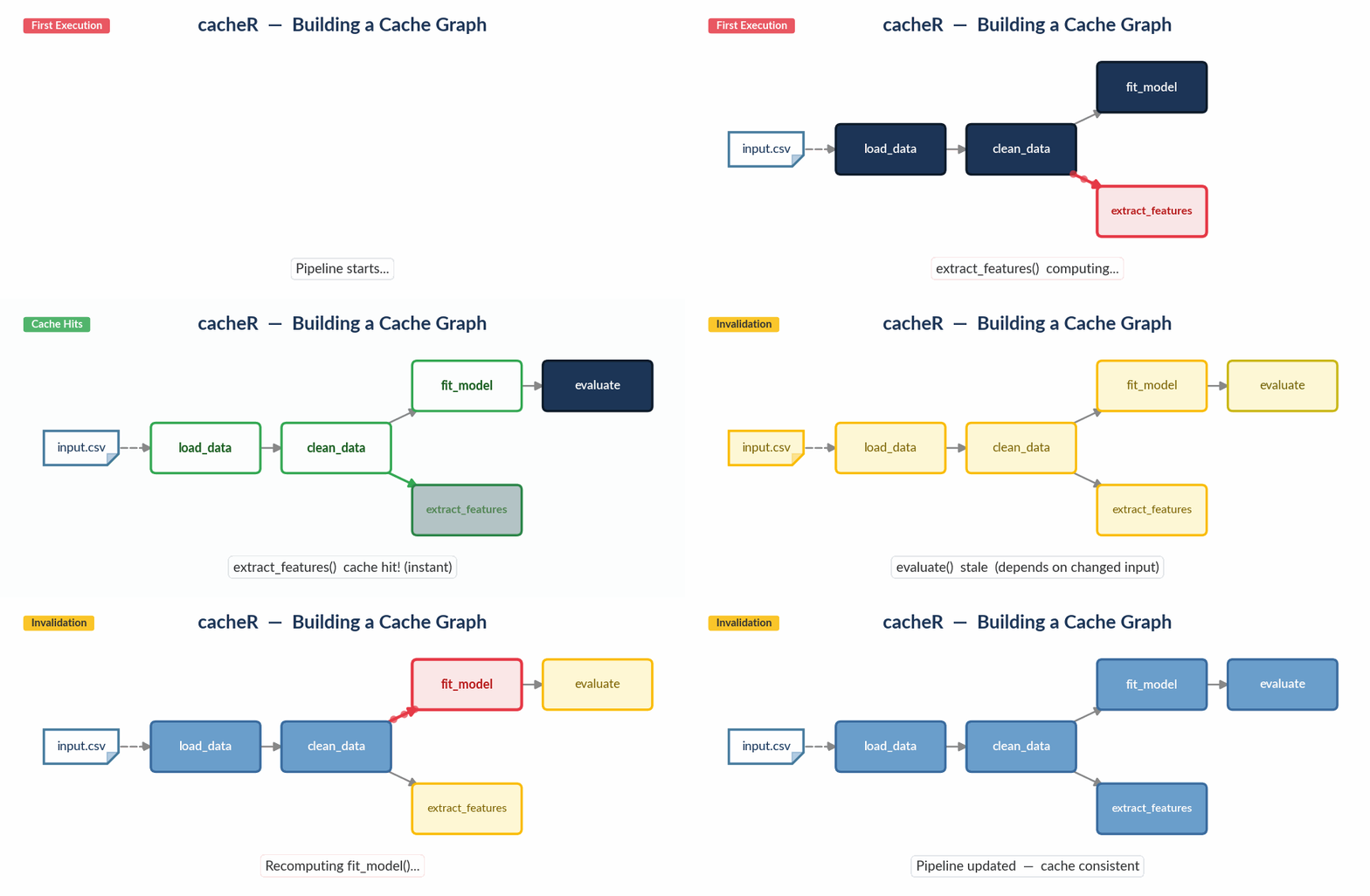
What is it useful for?
Keeping the analysis up to date
Saving time
Not using obsolete results
Reusing heavy computations safely and transparently
Basic usage
The package introduces:
-
cacheFile()— a caching decorator
-
%@%— an operator for applying decorators
-
cacheTree_*()— functions for inspecting the cache tree
library(cacheR)

cache_dir <- file.path(tempdir(), "cache_test")
dir.create(cache_dir, recursive = TRUE, showWarnings = FALSE)

# Define cached functions
inner <- cacheFile(cache_dir) %@% function(x) x + 1
outer <- cacheFile(cache_dir) %@% function(x) inner(x) * 2

# Execute
outer(3)
#> 8
How does cacheR decide to recompute?
A cached call is reused only if all of the following are unchanged:
- The function body (including inline code changes)
- The arguments (up to hashing / comparison rules)
- The tracked files / directories, where relevant
- The package versions of any non-base functions used
- The environment variables used by the function
If any of these change, cacheR invalidates the old entry and recomputes.
Limitations & caveats
Package boundaries:
cacheR stops tracking when it hits a function imported from a package.
Instead, it records the package name and version. It does not inspect the internals of those functions.Native code / C / external tools:
C/C++ code and external tools (e.g.system("bwa mem ...")) are not tracked. If they change, cacheR will not notice unless their inputs / outputs change in a tracked place.Side effects:
Functions with side effects (writing to global variables, random seeds, databases, etc.) are not fully “safe” to cache. Prefer pure, data-in/data-out functions.